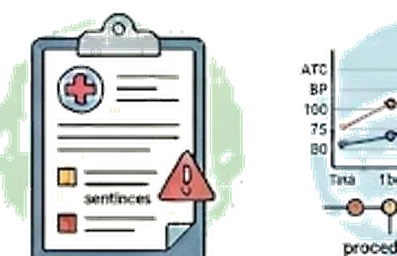
The hero feature
Plain-language visit summaries
Turn a 20-minute doctor visit into something your brother in Seattle can actually read.
The after-visit-summary problem
Most American hospitals and clinics now hand patients an "after-visit summary" — a 4-page printout in 10-point font full of CPT codes, ICD-10 numbers, abbreviations, and instructions written for the next clinician, not the family. The person who went to the appointment leaves with vague memories. The siblings who didn’t go get nothing. The parent, especially if English isn’t their first language, gets even less.
Three bullets, plain English, drafted in seconds — inside the shared workspace
Paste the doctor’s notes (or paste your own scribbled notes, or dictate them) and Kintaria drafts a plain-language summary in three sections: new medications, action items, and follow-up questions to ask next time. You review, edit, and finalize — Kintaria never decides anything, it just does the cognitive work of turning jargon into something a non-medical sibling can read in 30 seconds. The summary goes into the workspace, gets bilingual-translated if your parent’s language is set, and shows up in the daily digest siblings get by email. The medication line auto-files to the workspace medication list. The follow-up date auto-files to the shared calendar. The summary itself lives next to last quarter’s A1c trend, last month’s discharge summary, and the running consent-basis log — so the new clinician at the next appointment can see the whole picture, not just one captured visit. The summarizer is the easy part; the workspace it lives inside is the part that makes it useful three months later.
A real cardiology summary
Input: 1,200 words of post-visit clinical notes. Output: "New medication: Metoprolol 25mg, once daily, evenings. Action item: monitor blood pressure morning and evening for two weeks. Follow-up: cardiology in 6 weeks, office will call to book. Open question: can he keep his current routine while starting the new med?" Your brother in Seattle reads it during his lunch break and texts back "got it, calling Dad tonight."
The longer version
The problem
Every primary-care visit produces roughly the same set of useful information: what the doctor observed, what changed in the medication list, what tests are pending, what to watch for at home, and when to come back. Caregivers leave the office holding fragments of all five and a head full of guilt about the four things they forgot to ask.
By the time you’re back in the car, the cardiologist’s exact words about “maybe consider switching the Eliquis if the kidney number gets worse” have collapsed into “something about the medication, I think we’re supposed to watch the kidneys.” By the time you’re explaining it to your sister three hours later in a text, it’s lost two more layers of nuance. By the time you’re at the next appointment two weeks later, you’re reconstructing it from memory.
The handoff from doctor’s office to family is the leakiest part of caregiving. Multiply this by every appointment, every specialist, every ER visit for the next ten years and you have a portrait of the medical record most American families actually maintain: a chain of half-remembered conversations connected by guesswork.
What Kintaria does
You sit down after the appointment (or in the parking lot, before you forget). You open Kintaria, hit “New visit summary,” and dump everything you remember into one text box. Doesn’t have to be organized. Doesn’t have to be complete sentences. You can paste in the after-visit summary the office printed if you have it. You can type in fragments like “BP fine, A1C up to 7.2 from 6.8, told to add 5min walk after dinner, recheck in 3 mo, watch for swelling in legs.”
Kintaria’s AI (Claude) reads what you wrote and produces a structured one-page summary in plain English:
- What happened — the gist of the visit in two sentences
- What changed — any medication added, removed, or adjusted
- What to watch for at home — symptoms or measurements to monitor
- Action items — labs ordered, referrals made, follow-ups scheduled
- Questions for next visit — anything left unresolved
The summary lands in the workspace. Every sibling sees the same version. The next appointment, the new specialist, the social worker — anyone in the workspace can read it in 60 seconds and know exactly where things stand.
Why this works (when generic AI doesn’t)
You could in theory paste the same text into ChatGPT and ask for a summary. Three reasons Kintaria’s version is meaningfully better in practice:
It’s in the right place. The summary lives inside your parent’s workspace, not in a chat history nobody can find. It’s tagged with the visit date, the provider, the parent. It’s on the timeline. Six months later, when the next cardiologist asks “when did her ejection fraction get measured last and what was it,” you can find it.
It’s context-aware. Kintaria’s prompt knows your parent’s current medication list, recent labs, and active conditions. When you mention “the kidney number” without a value, the summary can connect it to the eGFR result from two months ago. ChatGPT can’t.
It’s shareable in the form everyone actually needs. Click “Share as note” and it goes to the workspace feed. Click “Print” and you get a one-page handout for the next provider. Click “Share with provider” and you get a time-limited link the new specialist can read.
What it doesn’t do
Kintaria’s visit summary is a memory aid for the family, not a clinical document. We don’t pretend otherwise.
- The doctor’s after-visit summary is still the canonical record. Kintaria’s version is your family’s working notes, indexed and made searchable.
- It can be wrong. AI sometimes misreads “Eliquis 5mg twice daily” as “Eliquis 5mg daily.” Every summary is shown to you for review before it lands in the feed. You edit before it goes out.
- It’s opt-in. AI features are off by default on every workspace. You turn them on in Settings after reading a one-paragraph explanation of where the content is sent, how long it’s retained, and how to turn it off.
Why this matters for the family, not just the caregiver
The unique pain of being the primary caregiver isn’t the work. It’s the loneliness of being the only person who knows what’s actually going on. Siblings ask “how’s Mom?” and the honest answer is too complicated for a text message. So you say “she’s okay,” and they go back to their lives, and you go back to being the only one holding the whole picture.
Visit summaries break that loneliness. Every sibling can see the same version of what the doctor said. They can ask informed questions. They can offer to come to the next appointment knowing what to expect. They can be useful, instead of having to ask you to be useful for them.
That’s the real product. The AI part is just plumbing.
The unique pain of being the primary caregiver isn’t the work. It’s the loneliness of being the only person who knows what’s actually going on.
More of what Kintaria does
Voice line
Call (888) 704-0999 from your registered phone and dictate a note. No app, no sign-in, no typing.
Learn more →CaptureMedical history with lab trends
A1c, blood pressure, kidney function charted over time. The chart you wish the doctor was showing you.
Learn more →CaptureApple Health import
Pull a year of heart rate, BP, weight, and walking steadiness from the iPhone Health app. One import.
Learn more →Start your free trial.
Free for 12 months for the founding 500 families. No card, no waitlist.