Care for a loved one, together.
Coordinate appointments, medications, and visit summaries in one calm, shared place — in English and the language they read most easily.
Built for the families holding it all together — whether you're caring for an aging parent, a spouse, an adult child with complex needs, or a sibling. Kintaria is the only caregiver workspace where the person you're caring for reads notes in their language and the family reads them in English. Plus shared calendar, medical history with lab trends, plain-language visit summaries, and step-by-step playbooks for the hard moments.




A single, shared place for everyone.
Kintaria replaces the chaos with structure. Three things, done calmly.
Create a workspace for your parent
Sign in, add your mom or dad, and invite your siblings. Everyone gets the same view — nobody has to be briefed.
Capture appointments as they happen
Record a visit (with the doctor's permission) or paste your notes. Kintaria drafts a plain-English summary: what changed, what to do next.
Keep everyone in the loop, without the group text
Updates, medication changes, and documents live in one calm feed. Siblings check in when they can — no more nagging.
It shouldn't all fall on one person.
Today, caring for an aging parent means living inside a group text nobody keeps up with, a Google Doc nobody maintains, and a phone that rings at the worst possible moment. One person ends up holding everything — and quietly burning out.
Turn a doctor's visit into shared context in minutes.
Record the appointment (with consent) or paste your notes. Kintaria drafts a plain-language summary — new prescription flagged, action items listed, follow-up questions ready. You review and edit; Kintaria never decides anything for you.
Mom reads in her language. The kids read in English. One shared record.
The only caregiver workspace where the person being cared for and the family caring for her can each read in their own language — inside one shared workspace. Notes you write in English appear in Mom's language side-by-side. The original is always preserved as the record.
Seven languages today: English, Spanish, Chinese, Korean, Japanese, Vietnamese, Tagalog. Translations land in seconds — and stay accessible whenever someone reopens the workspace.
Read the strategic note →Your family's information stays in your family.
What you put into Kintaria is for your family to see — not advertisers, not other families, not us. Documented below; explained in plain language on our security page.
Better than the group text. Without throwing it out.
Group chats, shared docs, and Apple Notes work — until a parent's care gets complicated. Here's what changes when the work moves into Kintaria.
Everything one family needs. Nothing extra.
Built around the four-or-five things a caregiver actually reaches for, in the moment they reach.
Daily care
Bilingual workspace
Notes auto-translate side-by-side. Mom reads in Mandarin, Korean, Japanese, Spanish, Vietnamese, or Tagalog; siblings read in English. Original always preserved as the record.
Shared calendar
Every appointment in one place, with the prep questions, the directions, who's driving. iCal subscription so it shows up in Apple/Google/Outlook.
Medical history with lab trends
A1c, blood pressure, kidney function — charted over time so you can see what's drifting. Hospitalizations, procedures, immunizations on one timeline.
Plain-language visit summaries
Paste in the after-visit summary, get back three bullets a non-medical sibling can understand. The new medication auto-files to your meds list; the follow-up date auto-files to the shared calendar; the summary lives next to last quarter's lab trend.
Step-by-step playbooks
Hospital discharge, after a fall, new dementia diagnosis — each one walks you through who to call, what to ask, what to write down, in the order you'll actually do it.
Voice line
Call (888) 704-0999 from your registered phone, dictate a note hands-free. For walking back to the car after an appointment, or the kitchen at 11 PM after the hospital called.
Sharing & safety
Built for health data
Encrypted at rest + in transit. Full audit trail. Private by default — your family's data stays inside your family's workspace, never used to train AI, never sold.
Share with a provider
One-time URL you can hand to a doctor or social worker. Read-only, time-limited, revocable, scoped to just what you choose.
Print-ready one-pager
A clean PDF summary for the ER, the new doctor, the cardiologist who hasn't seen the chart yet. Folds into a wallet.
Why families turn to Kintaria.
“I'm Linda. I cared for my mom for three years, and most of those years I was the only one who really knew what was happening.”
Linda's story sounds like a lot of caregivers we talk to. One person quietly holding the schedule, the meds, the questions for the next doctor — and a family that wants to help but never quite knows how.
Kintaria is built to change that. One shared place. Everyone on the same page. Nothing lost between visits.
The translation tax: how language quietly decides who gets to participate in a parent's care
By Kintaria Team · June 1, 2026 · 7 min read
In millions of American families, the person providing the care and the person needing the care don't share a first language. The cost shows up in places nobody counts.
Read the essay →Earlier essay · Long-form
If you're a caregiver on Medicaid, here's what the June 1 CMS rule actually means for you
By Kintaria Team · June 1, 2026 · 6 min read
About 8 million unpaid family caregivers are on Medicaid. The new federal rule defines how the family-caregiver exemption from the community-engagement requirement gets verified. Plain-English explainer of who qualifies, what to file, and what changes nothing.
Read →Features
Browse all 20 →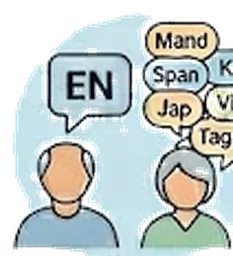
Bilingual workspace
Mom reads in her language. Her American-raised kids read in theirs. One shared record, no translation tax on anyone.
Learn more →Coordinate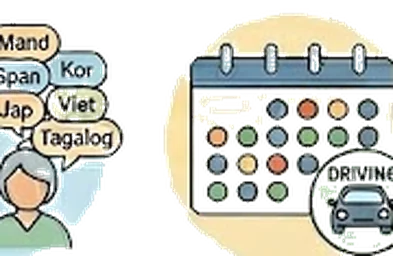
Shared calendar
Every appointment in one place — with the prep questions, directions, and who’s driving.
Learn more →Capture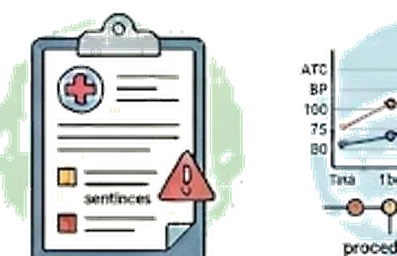
Plain-language visit summaries
Turn a 20-minute doctor visit into something your brother in Seattle can actually read.
Learn more →Navigate
Step-by-step playbooks
The question isn’t "what do I do?" It’s "what do I do first?" Playbooks answer that.
Learn more →Navigate
Medication review
Flags interaction risks across the full med list. Surfaces fall-risk meds, anticholinergic load, and things to bring up at the next visit.
Learn more →Trust
Share with a provider
A one-time URL you can hand to a doctor, social worker, or attorney. Read-only, time-limited, revocable.
Learn more →Get your family on the same page.
Set up your workspace in 2 minutes. Free for the founding 500 families — no credit card, no waitlist.