Adult child with disabilities · Future planning
When you are the parent-caregiver and you need to plan for after you.
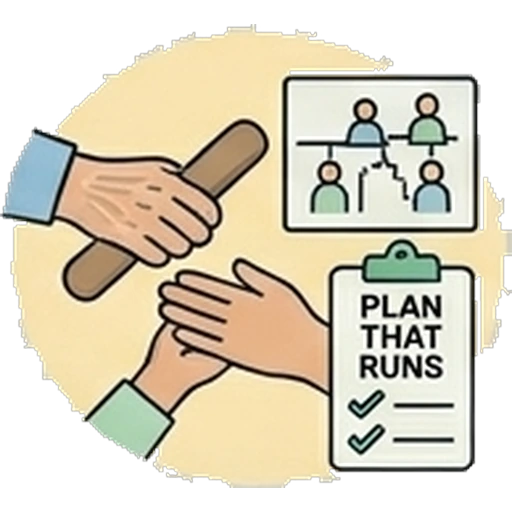
The conversation parents of adult children with disabilities most want to have and most avoid. The arithmetic is straightforward: your child will likely outlive your ability to caregive. The plan that exists at that moment is the plan that runs. The playbook covers writing down what currently happens in a normal week (the single most valuable artifact you can leave behind), identifying and ranking candidate successor caregivers, the concrete "here is what taking over would actually mean" conversation with the successor, the special-needs trust + ABLE + beneficiary-designation work, the letter of intent, guardianship-with-named-successor (not just guardianship), bringing siblings into the workspace as observers years before they need to take over, and the yearly review.
How a Kintaria playbook works
Every playbook is structured the same way — so once you know one, you know all of them. Four sections in order:
- What's happening. A 2-3 paragraph orientation in plain language. What the moment is, why it's hard, what families typically miss.
- This week. Specific, named actions for the next 7 days. Phone numbers to call, paperwork to find, conversations to have. Prioritized top-to-bottom.
- This month. The structural work to set up over the next 30 days. The legal documents, the support systems, the family rhythms that prevent the next crisis.
- When to call a pro. An escalation list — warning signs that warrant a same-day call to a clinician, attorney, social worker, or crisis line.
Most playbooks finish with a list of related playbooks and the relevant documents in your Kintaria workspace.
Why a playbook (and why not a chatbot)
A chatbot can answer one question at a time. The hard part of family caregiving isn't finding an answer — it's knowing which question to ask next, and remembering what you decided last week. A playbook is a structure for the dozens of decisions that follow the first question, and a shared place where the family agrees who's doing which one.
Static enough that a tired sibling can pick it up at 11 PM and know what to do. Dynamic enough that finishing one task surfaces the next. The playbook lives in your Kintaria workspace alongside the medication list, the appointment calendar, and the activity feed — so the work the playbook surfaces happens in the same place the rest of the work is already happening.
A note on what we are (and are not)
Kintaria is not a clinical tool, not a legal advisor, not a substitute for a doctor, attorney, social worker, or hospice team. The playbook gives you structure and orientation — it does not replace professional judgment in the moments when professional judgment is what's needed. The escalation list at the bottom of every playbook is honest about that boundary.
Related playbooks
Open this playbook in Kintaria →
Free 12-month trial. Personalizes from your answers. Lives in your family's shared workspace.