Coordinate
Family members + roles
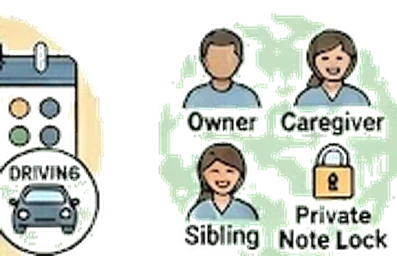
Owner, caregiver, observer, parent — four roles that match how families actually share care.
One permission level fits no one
Most caregiver apps give you a binary: either someone is a "member" (sees everything, changes everything) or they’re not. That doesn’t match how families work. The sister who lives across the country wants to stay informed but isn’t making decisions. The home-health aide needs to read the med list but shouldn’t see the legal documents. The parent themselves should be able to read along but maybe not see the caregivers-only sidebar conversation.
Four roles, each with a clear default
<strong>Owner</strong> created the workspace and controls the settings. <strong>Caregiver</strong> reads and writes everything except owner-only settings — siblings, aides, anyone actively helping. <strong>Observer</strong> is read-only — for a peripheral relative who wants to stay informed without contributing. <strong>Parent</strong> is the person being cared for: they see the workspace and can post their own updates, but caregivers-only notes stay hidden. Every member also carries a consent basis (family, POA, etc.) that records why they have access.
A typical family setup
Workspace owner: you (the eldest, in-town). Caregivers: your sister (also in-town, helps with appointments) and the home-health aide (manages meds three days a week). Observer: your brother in Seattle (digest mode, follows along). Parent: Mom, who reads notes in Mandarin on her phone. Each person sees the workspace through the lens that matches their actual role. When the aide leaves the job in 6 months, you revoke her seat in one click — her contributions stay in the audit log, labeled.
More of what Kintaria does
Bilingual workspace
Mom reads in her language. Her American-raised kids read in theirs. One shared record, no translation tax on anyone.
Learn more →CoordinateShared calendar
Every appointment in one place — with the prep questions, directions, and who’s driving.
Learn more →CoordinateActivity feed
Plain-language timeline of every change, attributed by name and consent basis.
Learn more →Start your free trial.
Free for 12 months for the founding 500 families. No card, no waitlist.